
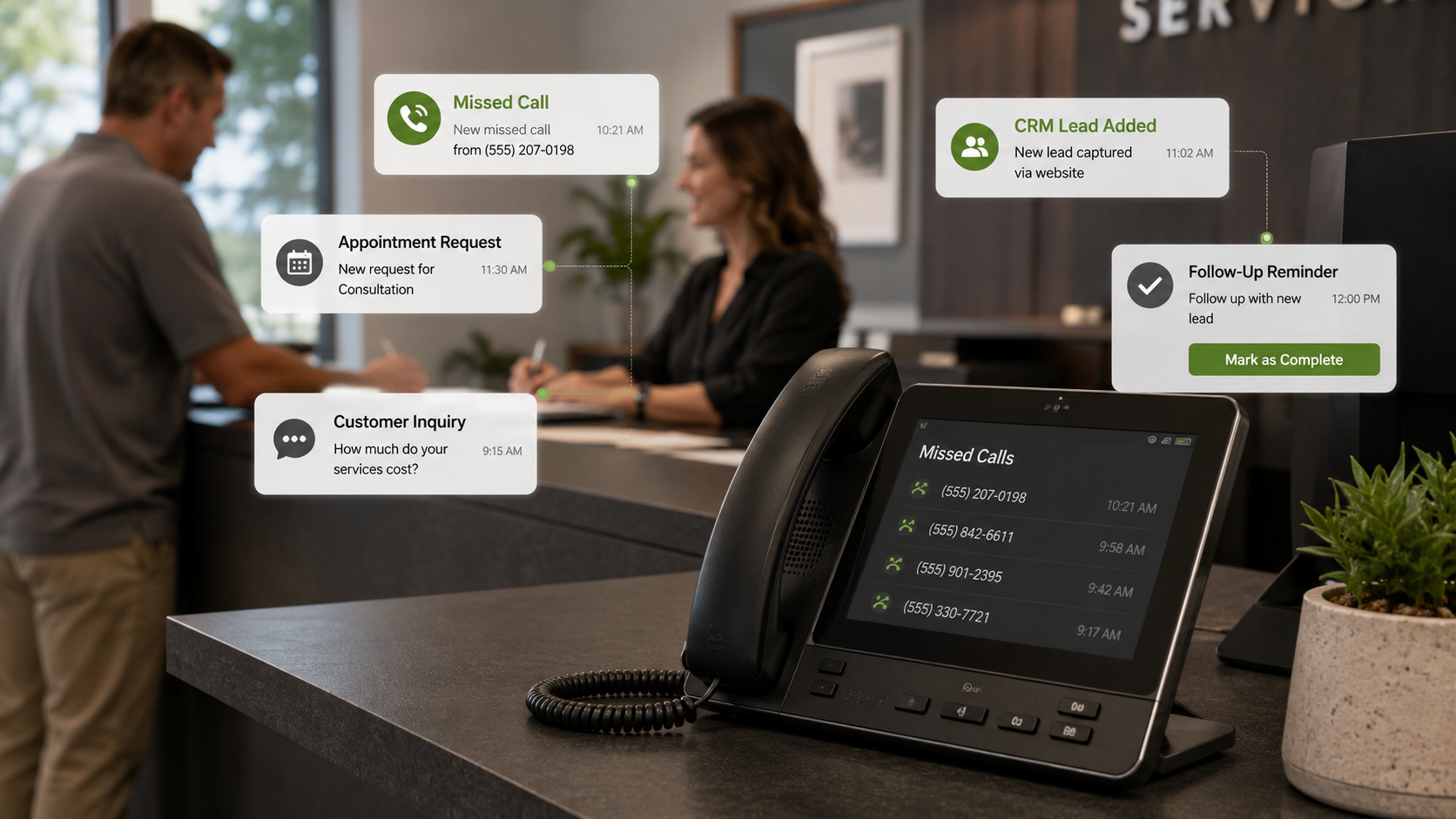
Introduction: Your Phone Might Be Leaking Money
Missed calls cost businesses money in a way that is easy to ignore.
Not because business owners do not care.
Most care a lot.
The problem is that missed calls do not always look like lost revenue right away.
They look like a notification.
A voicemail.
A number you meant to call back.
A customer who called during lunch.
A lead who reached out while you were helping someone else.
A phone ringing while the team was busy.
And because nobody complained, it feels like nothing major happened.
But something did happen.
A customer raised their hand.
Your business did not answer in the moment.
And in many industries, that moment matters.
If someone calls a dentist, plumber, salon, gym, restaurant, contractor, clinic, law office, real estate agent, repair service, or local business, they may not be calling just to chat. They are often trying to solve a problem, ask a question, check availability, book an appointment, or compare options.
That call might be the sale.
That call might be the booking.
That call might be the first step toward a long-term customer.
When the call is missed, the opportunity does not politely sit there forever holding a tiny briefcase.
It often moves.
The person calls someone else.
They click the next result.
They leave a message and forget.
They get distracted.
They assume you are too busy.
They decide the other business is easier to reach.
That is why missed calls cost businesses money.
Not every missed call becomes a lost sale, but enough of them do.
And for small businesses, a few lost calls per week can become a serious gap over time.
This article breaks down:
- Why missed calls are more expensive than they look
- What customers think when a business does not answer
- Why voicemail is not enough
- How missed calls affect trust, reviews, and revenue
- What systems help businesses capture more opportunities
- How to fix missed calls without living next to your phone
Because the goal is not to answer every call personally forever.
The goal is to make sure interested customers do not disappear just because your business was busy for five minutes.
Quick Answer: How Do Missed Calls Cost Businesses Money?
Missed calls cost businesses money by creating lost sales opportunities, delayed follow-up, lower customer trust, fewer bookings, and more leads choosing competitors.
For local businesses, every missed call can represent a potential customer who was ready to ask, book, visit, or buy.
Why Missed Calls Matter More Than Most Businesses Think
A missed call is not just a communication issue.
It is often a conversion issue.
That is because phone calls usually happen when someone has intent.
They are not casually browsing.
They are not just vaguely curious.
They may be ready to:
- Book an appointment
- Ask about pricing
- Confirm availability
- Request service
- Check hours
- Get directions
- Solve an urgent problem
- Compare your business to another one
That means a missed call may happen at one of the most valuable moments in the customer journey.
The customer is already interested enough to take action.
That is not the time to let the lead slip into voicemail purgatory.
A website can create awareness.
A Google Business Profile can create visibility.
Social media can create familiarity.
But the phone call is often where intent becomes action.
That is why missed calls hurt.
They interrupt momentum.
And in business, momentum matters.
Customers Do Not Always Call Back
Here is the uncomfortable part.
A missed call does not mean the customer will wait.
Some people leave voicemails.
Some people call back later.
Some people send a message.
But many people simply move on.
Especially when the need is urgent or competitive.
If someone needs a same-day appointment, emergency repair, last-minute reservation, product availability, consultation, or quote, they may call multiple businesses. The first business that answers clearly and professionally has an advantage.
Not because they are automatically better.
Because they were reachable.
That is the part many businesses underestimate.
Availability feels like trust.
When someone reaches your business and gets a fast response, the business feels organized.
When they do not, doubt creeps in.
They may wonder:
- Are they still open?
- Are they too busy?
- Will they be hard to work with?
- Did I call the right number?
- Should I try someone else?
That hesitation can cost the sale.
And most customers will not send a formal report explaining their thought process.
They just leave.
Quietly.
Like a lead ninja.
Voicemail Is Not a Complete Follow-Up System
Voicemail can help.
But voicemail is not a real lead capture system by itself.
It depends on too many things going right.
The caller has to leave a message.
The message has to be clear.
Someone has to listen to it.
Someone has to write it down or remember it.
Someone has to call back quickly.
The caller has to still be interested.
That is a lot of hope dressed up as a process.
Voicemail also does not feel immediate.
Many customers do not want to leave a message. They want an answer.
And if the competitor answers while your voicemail is still saying, “Your call is important to us,” the customer may already be gone.
This is why businesses need more than voicemail.
They need a system that can:
- Acknowledge the missed call quickly
- Capture the customer’s information
- Let the customer know what happens next
- Notify the team
- Create a follow-up task
- Send a text response when appropriate
- Track the opportunity inside a CRM
That is the difference between “we missed the call” and “we still captured the lead.”
The Real Cost of Missed Calls
The real cost of missed calls depends on your business.
For a restaurant, it may be missed reservations or catering inquiries.
For a dentist, it may be missed patient appointments.
For a contractor, it may be missed estimates.
For a salon, it may be missed bookings.
For a law firm, it may be missed consultations.
For a gym, it may be missed membership inquiries.
For a repair service, it may be missed emergency jobs.
The math can add up quickly.
For example:
If one missed call could have become a $150 appointment, five lost calls per month is $750 in missed revenue.
If one missed call could have become a $1,500 service job, losing a few calls per month becomes much more serious.
If one missed call could have become a long-term customer, the lifetime value may be much higher than the first transaction.
That is why missed calls should not be treated like small interruptions.
They should be treated like possible revenue events.
Not every call is valuable.
Some calls are spam.
Some are vendors.
Some are people asking questions with no intent to buy.
But the problem is that you often do not know which is which until someone answers or follows up.
That is why the system matters.
Why Small Businesses Miss Calls
Most small businesses do not miss calls because they are lazy.
They miss calls because they are busy.
Common reasons include:
- Staff is helping customers in person
- Owner is on another call
- Team is short-staffed
- Calls come in after hours
- Calls happen during lunch or breaks
- The phone number routes to one person
- The voicemail box is not checked often enough
- Nobody owns the follow-up process
- The business has no CRM or missed call workflow
This is a systems issue.
If every call depends on one person answering at the exact right moment, the business is fragile.
And the busier the business gets, the easier it is to miss more opportunities.
That creates a strange problem.
Growth can make call handling worse if the system does not grow with it.
The business gets more attention, more calls, more inquiries, and more leads.
But without structure, more opportunity turns into more chaos.
That is not a marketing win.
That is a bottleneck with a ringtone.
Why Speed Matters in Follow-Up
Fast follow-up matters because interest cools quickly.
When someone reaches out, they are usually in decision mode.
The longer it takes to respond, the more time they have to compare, second-guess, or choose someone else.
That does not mean every business needs to answer every call within three seconds.
It means there should be a clear response path.
If the call is missed, the customer should not feel ignored.
A simple missed call text-back can help.
For example:
“Thanks for calling. We are helping another customer right now, but we got your call. Reply here with what you need, and we will follow up shortly.”
That kind of response does a few important things.
It confirms the call was received.
It gives the customer another channel.
It reduces frustration.
It captures context.
It keeps the lead warm.
It tells the customer the business is paying attention.
That is much better than silence.
Compliance Still Matters With Calls and Texts
If your business uses text messaging, automated follow-up, or outbound calling, compliance matters.
This is where a lot of businesses need to slow down and build responsibly.
The FCC’s TCPA guidance explains that certain automated calls and texts require consumer consent. The FTC’s Do Not Call guidance for telemarketers and sellers also explains how the National Do Not Call Registry applies to telemarketing.
For SMS specifically, Twilio’s U.S. SMS compliance guide is a useful resource for understanding opt-in, opt-out, and consent expectations.
The simple version is this:
Do not treat automation like permission to spam people.
Use it to respond better, follow up clearly, and make the customer experience smoother.
If someone contacted your business, a helpful reply can be useful.
If someone did not give consent for marketing messages, do not start blasting promos like your phone got possessed by a coupon demon.
Automation should create trust, not risk.
Why Google Business Profile Alone Is Not Enough
Many local businesses get calls from Google Search and Maps.
That makes your Google Business Profile important.
Google’s Business Profile support page explains that businesses can use their profile to connect with customers, post updates, list products and services, share menus, and more.
But there is an important detail.
Google Business Profile chat and call history are no longer available as of July 31, 2024, according to Google’s official Business Profile support update.
That means businesses should not rely on Google’s old built-in call history tools to manage missed calls.
Your profile can help people find and call you.
But your business still needs its own follow-up system.
That system can include:
- Call routing
- Missed call text-back
- CRM tracking
- Lead assignment
- Appointment booking
- Follow-up reminders
- Email and SMS workflows
- Review request follow-up
Visibility gets the phone to ring.
Systems help you capture what happens after that.
What a Better Missed Call System Should Include
A better missed call system does not have to be complicated.
It needs to cover the gaps.
1. A Clear Call Flow
Decide what happens when someone calls.
Who answers?
What happens if that person is busy?
Does the call go to another team member?
Does it go to voicemail?
Does a text go out?
Does the lead get logged?
If nobody knows the call flow, the business is guessing.
Guessing is not a system.
2. Missed Call Text-Back
A missed call text-back sends a quick message when a call is not answered.
This is one of the easiest ways to keep a lead from going cold.
It works especially well for service businesses, appointment-based businesses, and local businesses where customers often need quick answers.
A good missed call text should be short, helpful, and human.
Example:
“Thanks for calling. We are helping another customer right now, but we got your call. What can we help with?”
That is simple.
No robotic novel.
No weird sales pressure.
Just a helpful bridge.
3. CRM Lead Capture
Calls should not vanish.
If a lead calls, fills out a form, books a consultation, or texts your business, that information should go somewhere organized.
A CRM helps you track:
- Name
- Phone number
- Source
- Service interest
- Follow-up status
- Appointment status
- Notes
- Next step
Without a CRM, leads often live in call logs, inboxes, sticky notes, and someone’s memory.
That is not ideal.
Memory is great for birthdays and song lyrics you did not ask to remember.
It is not great as your sales pipeline.
4. Appointment Booking
If your business books appointments, make it easy.
A missed call should be able to lead to a booking link when appropriate.
This helps customers take action without waiting for three rounds of phone tag.
5. Follow-Up Reminders
Not every lead converts immediately.
Some need a reminder.
Some need a second touch.
Some need more information.
Follow-up reminders help your team stay consistent without relying on random memory.
6. After-Hours Response
After-hours calls are easy to lose.
But customers do not always search during your business hours.
They search when they have time.
Even if you cannot answer after hours, your system can still respond.
A simple text or voicemail workflow can let the customer know you received the message and will follow up.
That keeps the door open.
Tools That Can Help You Capture Missed Calls
Tools are not the strategy.
But the right tools can help your business respond faster and stay organized.
A platform like GoHighLevel can help with missed call text-back, CRM pipelines, forms, calendars, email follow-up, SMS follow-up, and lead tracking in one place.
That matters because missed calls are rarely just a phone problem.
They are usually a follow-up problem.
If your website, Google profile, forms, calendar, and phone calls are disconnected, leads can slip through the cracks.
A connected system helps prevent that.
The goal is not to automate everything just to sound fancy.
The goal is to make sure real opportunities are not getting lost because your team was busy doing actual work.
How to Start Fixing Missed Calls This Week
You do not need a massive rebuild to start improving.
Start with a simple audit.
Step 1: Check Your Recent Missed Calls
Look at the past 30 days.
How many calls were missed?
How many got a callback?
How many left voicemails?
How many were never followed up on?
You need to know the size of the gap.
Step 2: Test Your Own Phone Process
Call your business like a customer.
Call during open hours.
Call during lunch.
Call after hours.
Listen to the voicemail.
Check what happens next.
Ask yourself:
- Does this feel professional?
- Is the message clear?
- Is there another way to contact us?
- Would I feel confident waiting?
- Does the system create a follow-up task?
This will tell you a lot.
Step 3: Create a Missed Call Response Script
Write a simple text-back message.
Keep it short.
Example:
“Thanks for calling [Business Name]. We are helping another customer right now, but we received your call. Reply here with what you need, and we will follow up as soon as possible.”
That is enough to start.
Step 4: Assign Follow-Up Ownership
Someone needs to own the process.
If everybody is responsible, nobody is responsible.
Decide who checks missed calls.
Decide when they check them.
Decide how they track the outcome.
Step 5: Connect Calls to Your CRM
Once the basic process is clear, connect it to a CRM.
This makes the system easier to manage over time.
The Better Way to Think About Missed Calls
Missed calls are not always avoidable.
That is okay.
The real issue is not whether a call gets missed.
The real issue is what happens next.
A missed call with no response is a leak.
A missed call with a fast text-back, CRM entry, follow-up task, and booking option is still an opportunity.
That is the shift.
You do not need to be chained to the phone.
You need a system that protects the opportunity when nobody can answer.
That is how small businesses stop losing leads in the gap.
Stop Letting Missed Calls Decide Your Revenue
If your business gets calls, your phone is part of your sales system.
That means missed calls deserve a real process.
The DIY route is simple enough to start.
Audit your missed calls.
Update your voicemail.
Create a text-back response.
Assign follow-up ownership.
Use tools like GoHighLevel to connect calls, forms, calendars, and follow-up into one system.
But if you do not want to build that system yourself, CLIK Creatives can build it for you.
That can include:
- Missed call text-back setup
- CRM pipeline setup
- Lead capture forms
- Appointment calendar setup
- Email and SMS follow-up
- After-hours response workflows
- Review request workflows
- Website and Google profile connection
- AI call handling options
- A simple follow-up system your business can actually use
You do not need to answer every call personally to stop losing opportunities.
You need a system that makes sure customers feel seen, captured, and guided to the next step.
If missed calls are costing your business money, CLIK Creatives can help turn your phone process into a connected lead capture system.
Quick note: Some links in this article may be affiliate links, which means CLIK Creatives may earn a commission if you buy through them, at no extra cost to you. This keeps things clear for readers and aligned with FTC endorsement guidance.
FAQ
How do missed calls cost businesses money?
Missed calls cost businesses money by losing potential appointments, sales, consultations, and service requests when customers move on to competitors or never receive follow-up.
Are missed calls really a big problem for small businesses?
Yes. For many local businesses, phone calls come from customers who are ready to take action. Missing those calls can mean missing high-intent opportunities.
Is voicemail enough for missed calls?
Voicemail can help, but it is not enough by itself. Many customers do not leave messages, and voicemail still depends on fast manual follow-up.
What is missed call text-back?
Missed call text-back is an automated message sent to a caller when their call is missed. It acknowledges the call and invites the customer to reply with what they need.
Is missed call text-back legal?
It can be, but businesses should understand consent, opt-in, and SMS compliance rules. The FCC, FTC, and SMS providers like Twilio offer guidance on calling and texting compliance.
What should a missed call text say?
A good missed call text should be short, helpful, and clear. For example: “Thanks for calling. We are helping another customer right now, but we got your call. Reply here with what you need.”
Do I need a CRM for missed calls?
A CRM helps because it organizes leads, tracks follow-up, and prevents calls from getting lost in phone logs or memory.
Can Google Business Profile track missed calls?
Google Business Profile chat and call history are no longer available as of July 31, 2024, so businesses should use their own phone, CRM, or call tracking system.
What businesses benefit most from missed call systems?
Dentists, salons, contractors, restaurants, gyms, clinics, repair services, law firms, real estate agents, and appointment-based businesses can all benefit.
Can CLIK Creatives set up a missed call system?
Yes. CLIK Creatives can build a done-for-you missed call and lead follow-up system that connects phone calls, CRM tracking, SMS, email, booking, and automation.
2026 Refresh: The Real Problem Is the Missing Recovery Path
A missed call is not only a missed conversation. It is usually a broken connection between customer intent and business response. The fix is not just ?answer more calls.? The fix is a recovery system.
That recovery system should identify the caller, understand the reason for the call, notify the right person, create a CRM record when appropriate, and trigger follow-up before the opportunity goes cold.
What a missed-call system should include
- Call capture and call reason tagging.
- Immediate text-back or callback routing when appropriate.
- Booking link or intake form for routine requests.
- Human escalation for complaints, urgent needs, or high-value opportunities.
- Reporting so the business can see patterns by source, time, and service type.
CLIK system tie-in: missed-call recovery belongs inside a Business Systems workflow: AI Concierge, Booking and CRM, Lead Capture and Follow-Up, and human handoff.
Related reading: AI Phone Answering Service for Small Business and Google Business Profile Optimization.